The short answer
- Koop engines are made by Changzhou Koop Power Machinery Co., Ltd., founded in 2007 in Changzhou, China. It says it can build 600,000 single-cylinder engines a year.
- The Koop on most low-cost 1-tonne diggers is the KD192F: a 499 cc air-cooled single-cylinder diesel rated at 7.6 kW at 3,000 rpm, or 8.6 kW (11.7 hp) at 3,600 rpm.
- Are they any good? For occasional work, yes: they're simple, cheap to fix, and a whole replacement engine costs about A$1,000 to A$1,400 in Australia. They're louder and shake more than a Kubota, have no glow plugs for cold mornings, and owners report early failures when the run-in, fuel and oil are neglected.
- The Kubota D722 is a 719 cc water-cooled three-cylinder: smoother, quieter and better on long days. On a 1-tonne digger it adds about A$4,000 to A$5,000.
- Whichever you choose, the first 20 hours matter most. Run it in gently and change the oil on time.
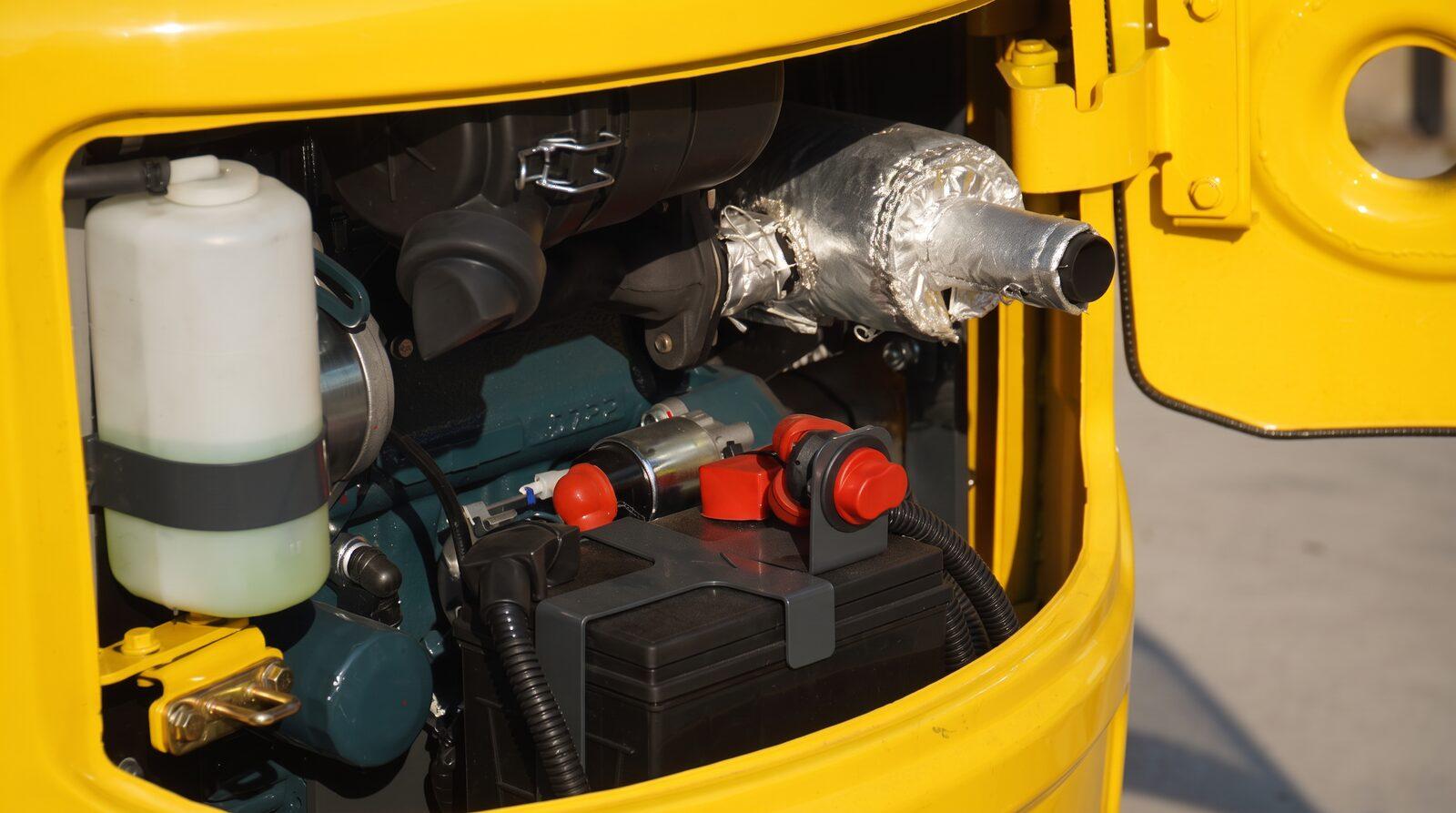
Almost every 1-tonne digger built in China is offered with one of two kinds of diesel: a single-cylinder engine from a Chinese maker, most often Koop, or a small three-cylinder from a Japanese maker, usually Kubota. The rest of the machine is often the same. The engine changes the price, how the machine feels to use, and how it copes with long days. We sell both, so we've set out the facts from the makers' own specifications and manuals, what owners report, and what parts cost here.
Who makes Koop engines?
Koop is the brand of Changzhou Koop Power Machinery Co., Ltd., in the Wujin Economic Development Zone of Changzhou, Jiangsu province, between Shanghai and Nanjing. Its website gives a founding year of 2007 and claims production lines for 600,000 single-cylinder and 30,000 twin-cylinder engines a year, plus generator sets. Koop diesels turn up in mini excavators, tracked dumpers, generators and water pumps around the world.
You may see Australian listings describe Koop as a company with "60 years" of history or as the world's "third largest" maker. Koop's own site doesn't say that; it says 2007.
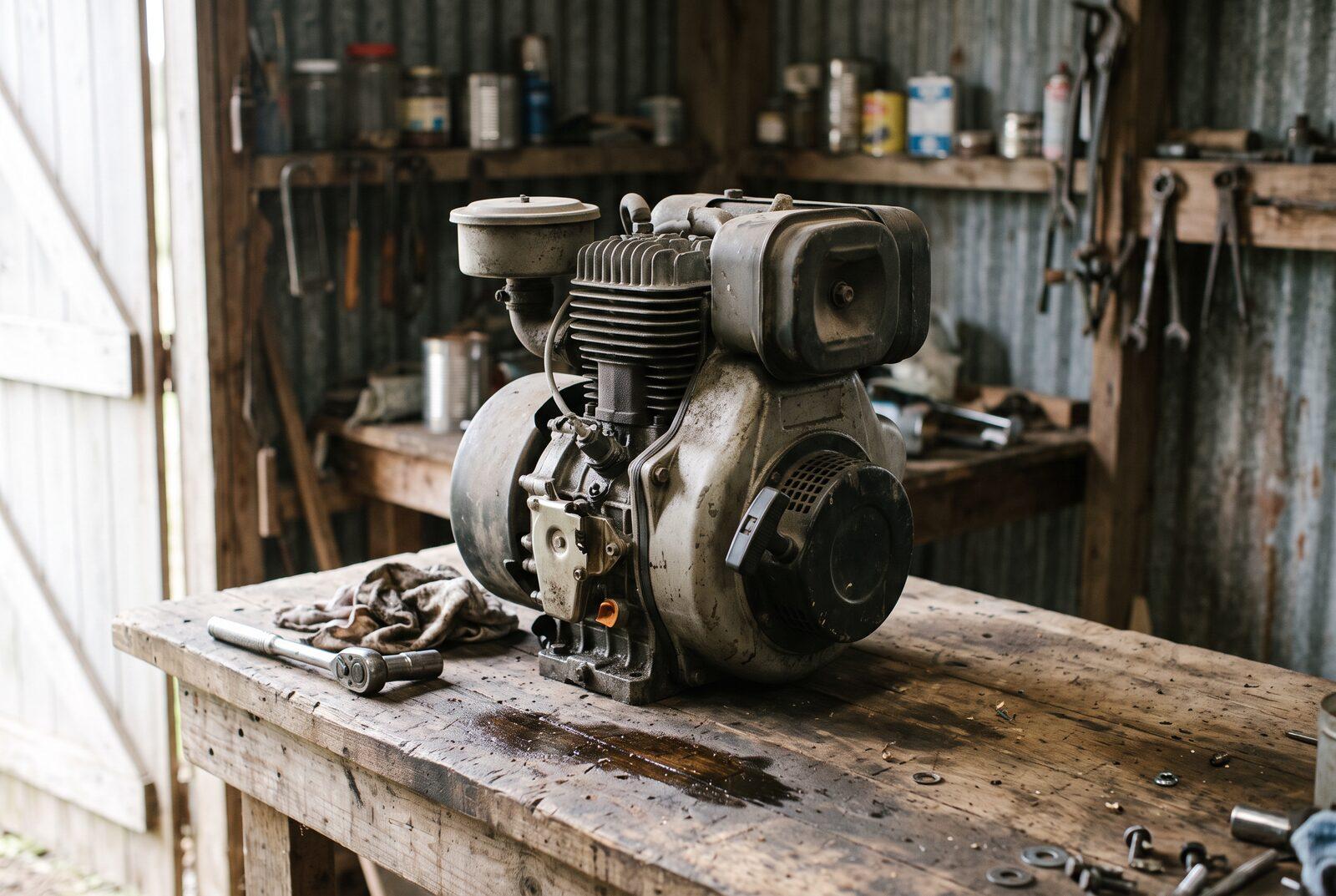
Koop KD192F specifications
"192F" is a size code more than a model name: it generally means one cylinder, a 92 mm bore and an air-cooled (F) design. Several Chinese makers build engines to the same pattern. Koop's published figures:
| Type | Single cylinder, four-stroke, vertical, air-cooled, direct injection |
|---|---|
| Displacement | 0.499 litres (499 cc) |
| Bore × stroke | 92 × 75 mm |
| Compression ratio | 19.5:1 |
| Rated power | 7.6 kW (10.3 hp) at 3,000 rpm; 8.6 kW (11.7 hp) at 3,600 rpm |
| Fuel consumption | 275 to 280 g/kWh |
| Engine oil | 1.65 litres, SAE 10W-30, API CD or better |
| Weight | 50 kg with pull start; 55 kg with electric start |
| Size | 417 × 441 × 494 mm |
| Starting | Pull start (F) or electric start (FE); decompression lever |
Koop KD192F / KD192FE, from koopchina.com and the Koop 192F manual, checked 13 November 2026.
Listings advertising a "12 HP Koop" are rounding up the 3,600 rpm figure. On a digger the engine is usually governed below its maximum, so the power you get at work is lower than the headline number.
Koop vs Kubota D722, side by side
| Koop KD192F | Kubota D722 | |
|---|---|---|
| Maker | Changzhou Koop Power Machinery, China | Kubota, Japan |
| Cylinders | One | Three |
| Cooling | Air (fins and a fan) | Water (radiator) |
| Displacement | 499 cc | 719 cc |
| Rated power at 3,600 rpm | 8.6 kW | 14.9 kW (gross) |
| In a 1-tonne excavator | Usually listed at its 3,000 rpm rating: 7.6 kW | Run slower: Kubota's own K008-5 and U10-5 rate it at 7.5 to 7.7 kW at 2,050 rpm |
| Weight | 50 to 55 kg | 63 kg dry |
| Cold starting | No glow plugs; a decompression lever and a cold-start tip in the manual | Glow plugs |
| How it feels | More vibration and noise | Smoother and quieter |
| Long, hot days | Better with breaks; keep the fins clean | Copes better; keep the radiator clean |
| Our 1-tonne digger with it | From A$11,990 incl GST | From A$16,490 incl GST |
Koop: koopchina.com. Kubota: engine.kubota.com (D722) and Kubota USA's K008-5/U10-5 brochure. Prices: our price list.
The power figures on a digger end up closer than the engine sizes suggest, because makers run the Kubota well below its 3,600 rpm rating; Kubota runs it at 2,050 rpm in its own 1-tonne machines. The bigger difference is how the power arrives: three cylinders firing in turn run smoother and quieter than one, and a radiator holds a steady temperature better than air cooling when it's 38 degrees and you've been digging all afternoon.
So, are Koop engines any good?
For the job most of them do, yes. A Koop single is a basic, low-cost engine with few parts, and on a 1-tonne digger used a few hours at a time around a property it does that work. When something does go wrong, a complete replacement engine costs around A$1,000 to A$1,400, so a failure is an inconvenience rather than the end of the machine.
It isn't a Kubota, and nobody should sell it as one. It vibrates more, it's louder, it starts less easily on frosty mornings, and it's less forgiving of a rough run-in, dirty fuel or skipped oil changes. We haven't found failure-rate data for Koop, or for any small-engine maker, so anyone telling you Koops are "unreliable" or "bulletproof" is going on stories. The stories are below.
Problems owners report, and what usually causes them
These come from owner forums and groups: individual reports, not statistics. Some owners also report years of use with nothing more than a blown fuse.
| What owners report | What owners and mechanics usually point to | What to check or do |
|---|---|---|
| Won't start after running out of fuel or changing a fuel filter | Air in the fuel system | Bleed it: crack the nut on the injector pipe, full throttle, crank until fuel comes out, then tighten |
| Hard to start on cold mornings | No glow plugs | Fully charged battery, the decompression lever, and the cold-start steps in the manual |
| Slow cranking, even with a new battery | Starter, cables or earth connection | Battery charge, the terminals and the earth strap; test the battery voltage while cranking |
| Stops suddenly, restarts after cooling down | Overheating, a blocked air intake, low oil or a faulty shut-off sensor | Oil level, air filter, cooling fins and fan shroud, fuel shut-off solenoid |
| Piston rings or a con-rod failing in the first tens of hours | Worked hard at full revs before it was run in, oil not changed, or dust getting in | Gentle first 20 hours, first oil change on time, a sound air filter |
| Loud and shaky | Normal for a single-cylinder | If it's a deal-breaker, look at a Kubota-engined machine |
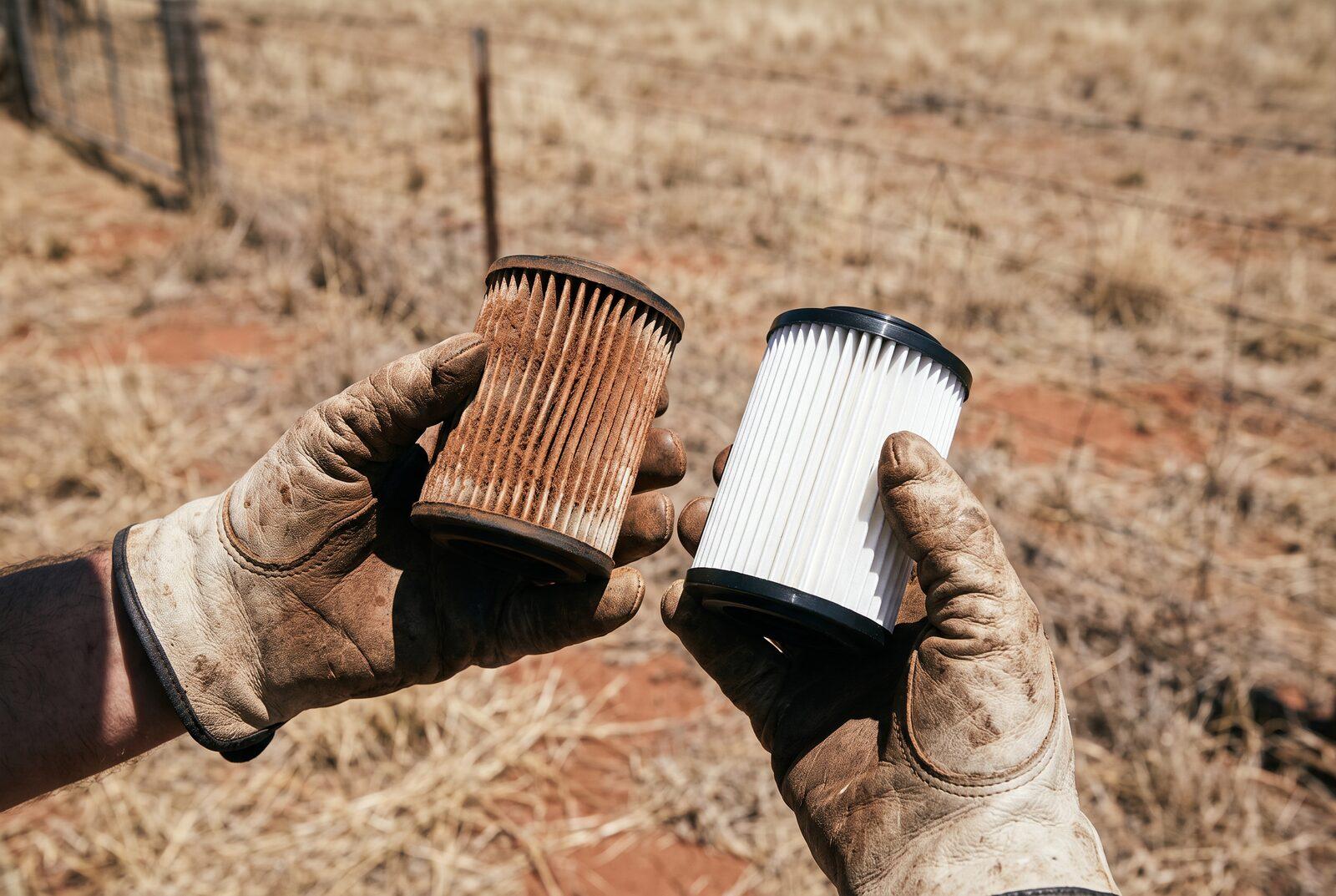
Servicing a Koop single
From the Koop 192F manual:
Koop 192F service points, from the maker's manual
- Run-in. The manual asks for low speed and light load for the first 20 hours, and no running at high speed and full load. On a digger that means easy digging, not ripping out stumps on day one.
- Oil. First change at about 20 hours or a month, then every 100 hours or three months.
- Air filter. A dry element: don't wash it, replace it if power drops or the exhaust colour changes, and never run without it.
- Fuel. Clean diesel without water or dirt; the manual even suggests letting fuel settle before use.
The manual doesn't cover everything in the pages we've read. One Australian seller publishes its own schedule for the KD192F with fuel and air filters at 250 hours and the valve clearance checked at 500 hours. When you buy, ask for the service schedule in writing and keep a log; it helps with any warranty claim.
Koop parts and engines in Australia
| Part | Price | Where we saw it |
|---|---|---|
| Koop KD192F complete engine | A$999 incl GST | Affordable Machinery (sold out when checked) |
| Koop 192 "12 hp" engine, keyway shaft | A$1,099 | BBTA |
| Air filter element | A$12 | Affordable Machinery |
| Pistons, crankshafts and filters for KD192F engines | listed | Plant and equipment parts sellers |
Australian sellers' listings, checked 13 November 2026, except the air filter (seen 7 November 2026). Check the shaft type and starter before ordering a replacement engine.
One owner whose engine failed at 40 hours was quoted about A$1,400 for a new engine. The Kubota D722 is fitted to many compact machines, so mechanics know it and its parts are easy to find. If you buy from us, we send parts for either engine by international courier.
Check that a "Kubota" is genuine
Some listings say "Kubota engine" for machines with a rebuilt or copied engine. In the Chinese export listings we looked at in October 2026, machines with "Kubota" in the title were often priced the same as ones without it, which suggests the word is sometimes just there to catch searches. Before you pay, ask for a photo of the engine plate and serial number on the actual machine you're buying. We send those with every inspection video.
Which one we'd choose
- Occasional jobs around your own place, a few hours at a time: the PD10 Koop, From A$11,990 incl GST.
- Regular use, or long and hot days: the PD12 Kubota, From A$16,490 incl GST.
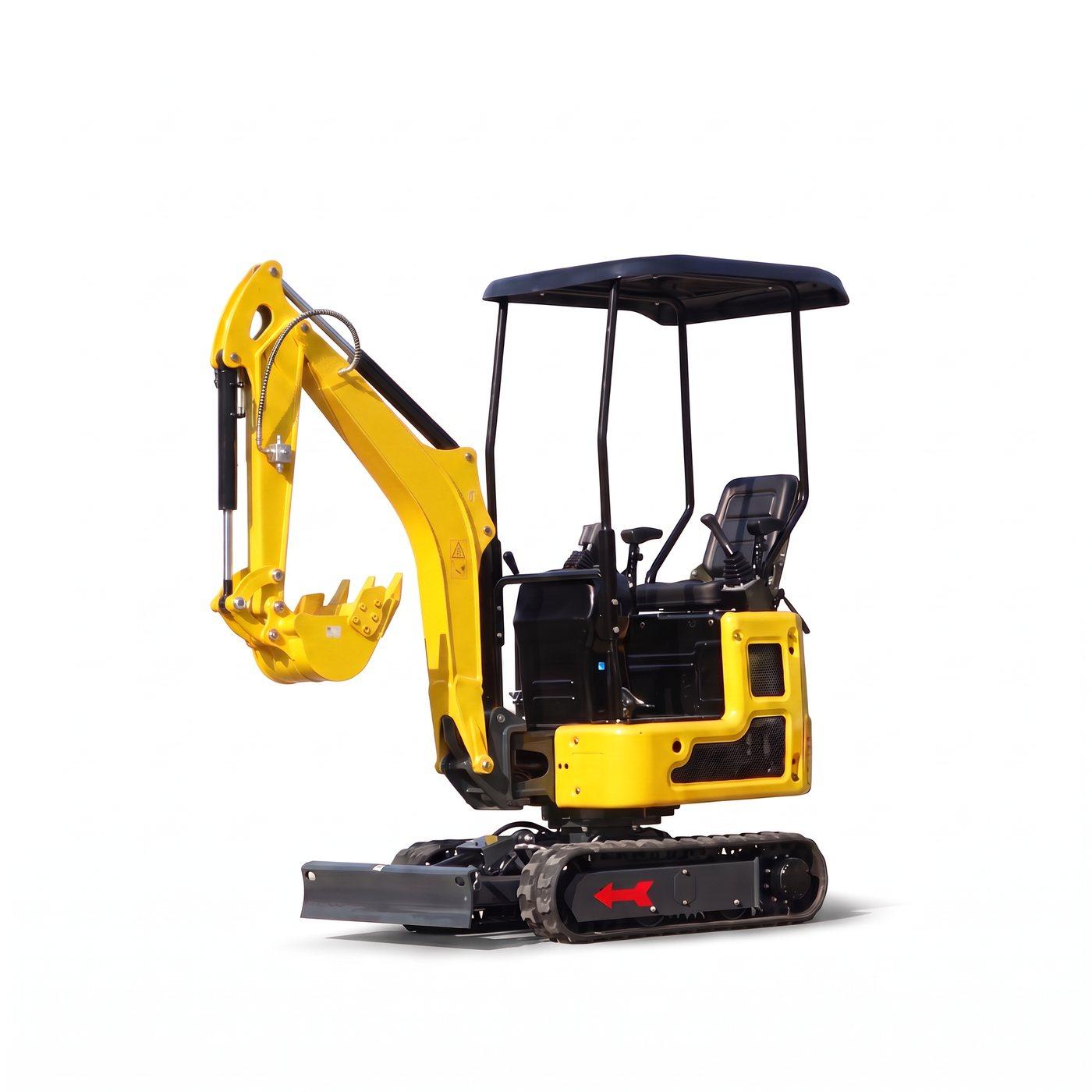 PD12 KubotaFrom A$16,490 incl GST, deliveredSee the PD12 →
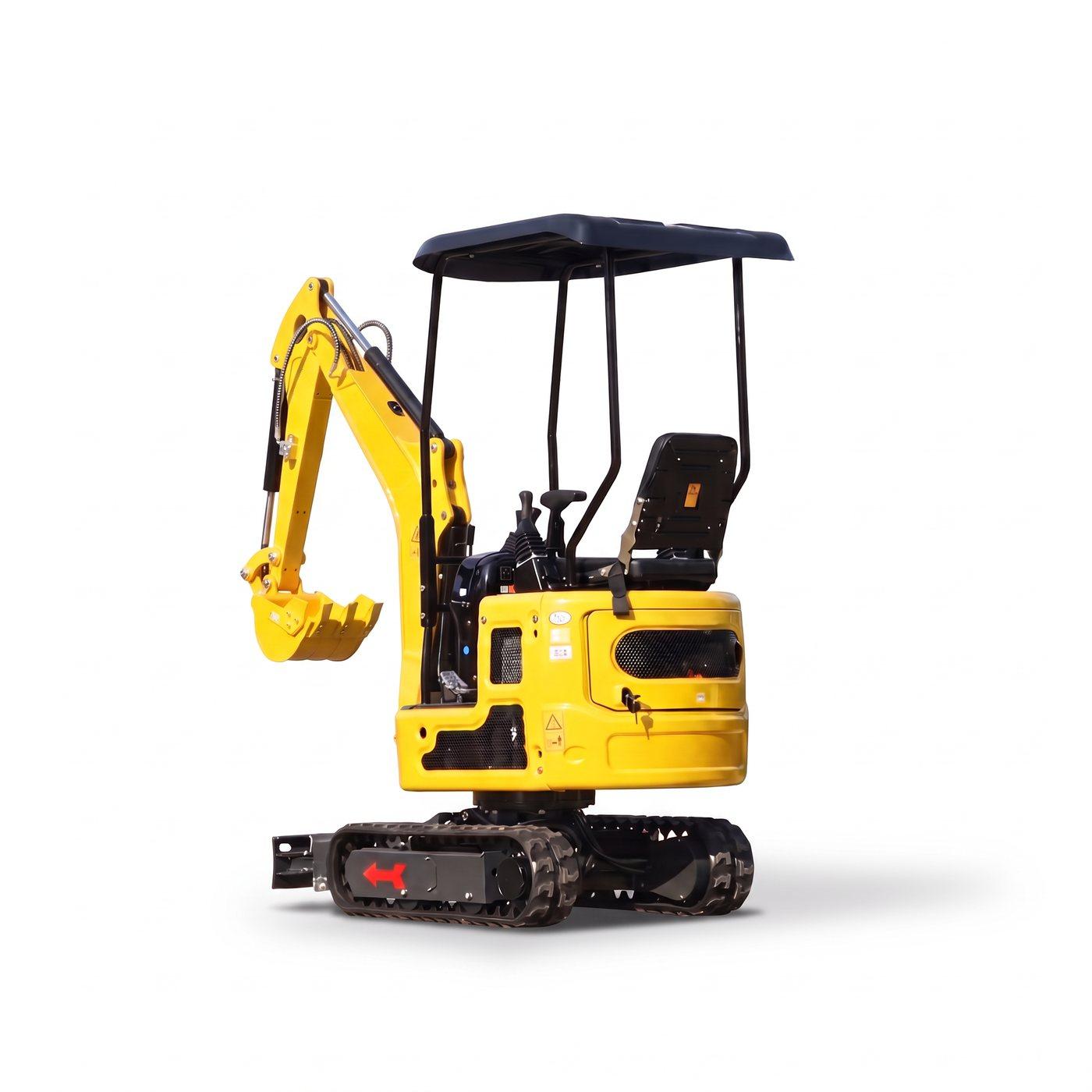 PD10 KoopFrom A$11,990 incl GST, deliveredSee the PD10 →
If you'd only use a digger a few days a year, hiring may cost less than either: our hire or buy guide works it out. For how these prices compare with the rest of the market, see our mini excavator price guide. Still not sure? Tell us about the job and we'll say which one we'd pick.
Common questions
Who makes Koop engines?
Changzhou Koop Power Machinery Co., Ltd., a Chinese company founded in 2007 and based in Changzhou, Jiangsu.
Are Koop diesel engines reliable?
There's no published failure-rate data. Owner reports range from years of trouble-free use to failures in the first 40 hours, and the early failures usually involve a hard run-in, oil or fuel problems. Treated well, they suit occasional work.
How much horsepower is a Koop 192F?
Koop rates the KD192F at 10.3 hp (7.6 kW) at 3,000 rpm and 11.7 hp (8.6 kW) at 3,600 rpm.
What oil does a Koop diesel take?
1.65 litres of SAE 10W-30, API CD grade or better, according to the Koop 192F manual.
Can I swap a Koop for a Kubota?
Some owners have fitted a Kubota in place of the original engine, but it isn't a bolt-in job: mounts, the hydraulic pump drive and the cooling all change. If you think you'll want the Kubota, buying it that way is cheaper.
Sources
- Changzhou Koop Power Machinery: company website
- Koop: KD192F/FE specifications
- Koop 192F user manual, English version (copy hosted by a reseller)
- Kubota Engine: D722 specifications
- Kubota USA: K008-5 and U10-5 specifications (D722 ratings in a 1-tonne excavator)
- Affordable Machinery: Koop KD192F spare engine
- r/miniexcavator: engine help, Koop 192F (May 2025)
- Heavy Equipment Forums: slow starter on a KD192F (January 2024)
- Owner reports from Facebook mini excavator owner groups (2024 to 2026) and a YouTube owner review
Not sure which engine suits your work?
Tell us what you'll be digging and how often, and we'll say which one we'd pick, with a delivered price for each.
Ask usWho wrote this guide
Paddock Diggers is based in Zoucheng, part of Jining in Shandong, China, a city with dozens of mini excavator factories. We sell two 1-tonne machines to Australian buyers. Each machine is checked and filmed at the factory before it ships, then delivered to your door for one written price. You pay a 30% deposit, refunded in full until the factory starts building, and the balance only after you've seen the video of your own machine. Warranty claims and parts go through us, by email and video call, with parts sent by international courier.
We write these guides from regulators' and manufacturers' own pages, dealer listings and our own quotes, list our sources, and update a guide when prices or rules change.